


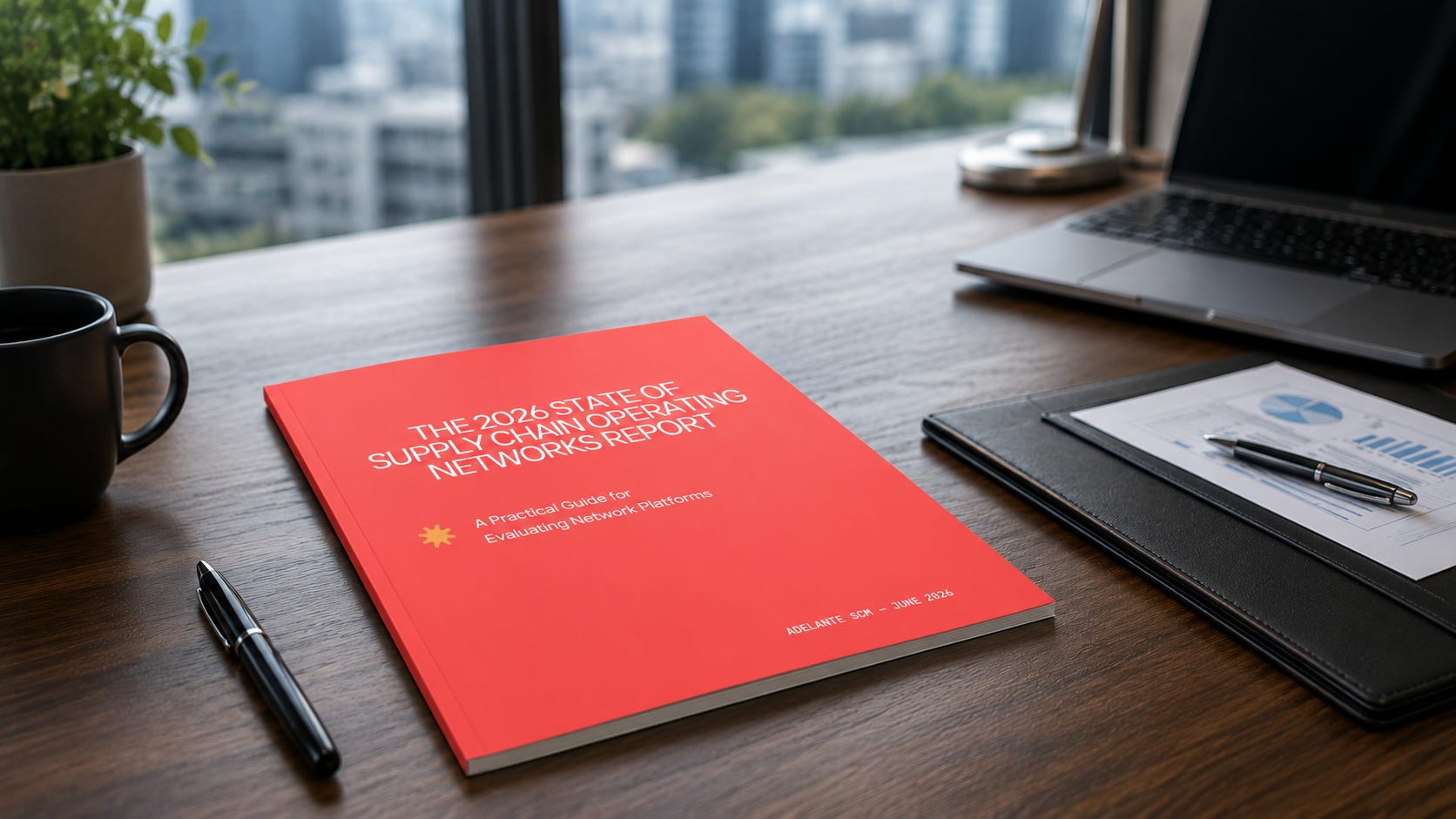
What are Supply Chain Operating Networks? Why are they more important than ever today? What factors matter most when evaluating and selecting a network platform?
Those are among the key questions addressed in the recently published The 2026 State of Supply Chain Operating Networks research report.
For more than two decades, I have researched, written, and spoken extensively about the role of network-based platforms in supply chain management and logistics. Many of my past research reports, blog posts, and market perspectives on Supply Chain Operating Networks — available at BetterWithANetwork.com — informed the development of this report.
In addition, we conducted an extensive survey with leading Supply Chain Operating Network providers in January 2026 to gather quantitative and qualitative insights on market positioning, network characteristics, platform capabilities, interoperability, onboarding models, AI and analytics capabilities, and perspectives on the current and future state of the market.
Charter Sponsors

Amazon as a 3PL: Opportunity or Risk?

Amazon recently launched Amazon Supply Chain Services (ASCS), opening its freight, warehousing, fulfillment, and parcel shipping capabilities to businesses beyond Amazon sellers. The offering positions Amazon as a broader third-party logistics (3PL) and supply chain services provider across industries including retail, manufacturing, healthcare, and automotive.
This survey explored how supply chain and logistics executives view this development, including potential benefits, concerns, and whether they would consider Amazon as a logistics partner.
Latest Talking Logistics Episode:
How AI is Unlocking Hidden Capacity in Delivery Fleets
Platinum Sponsors


New from Sponsor Blogs
Amazon Prime Day and Walmart Deals Set Up a High-Stakes Week for Ecommerce Sellers
Source: Descartes
Why Use Werner Dedicated in 2026?
Source: Werner
Q2 freight market update: Market pressures converge and create urgency
Source: Uber Freight
Produce season is here. Are you ready?
Source: Uber Freight
Podcast | Final Mile Excellence: What Separates the Best from the Rest
Source: Werner
2026 Outlook: Spot Market strategies for shippers, carriers and brokers
Source: Trimble
Transportation in 2026: From experimentation to acceleration
Source: Trimble
Gold Sponsors


The interesting finding in most of this research is that resilience turns out to be an organisational property rather than a network property. Two companies can run the same dual-sourcing strategy and the same inventory policy, and one still gets caught out, because in the second one somebody owns supplier qualification end to end and knows what a change at a tier-two supplier actually triggers.
That is sharper in pharma than almost anywhere else. Switching an API source or a packaging component is not a procurement decision, it is a regulatory variation with comparability work and possibly a filing behind it, so your real lead time is set by qualification and change control capacity, not by logistics. Networks are usually mapped long before anyone checks whether the people who can execute a supplier change are in place. More on that here: https://www.sire-search.com/life-science-supply-chain-consulting-grip-op-een-complexe-gereguleerde-keten/ (Dutch)