



Remember the ERP vs. Best-of-Breed debates from years ago?
If not, here’s the short version:
ERP vendors, such as SAP and Oracle, argued that a single integrated platform spanning finance, human resources, customer relationship management, order management, logistics, inventory management, and supply chain planning was the best approach. Why buy separate WMS, TMS, OMS, CRM, and planning systems — and deal with the cost and complexity of integrating and maintaining them all — when one platform could do it all?
Best-of-Breed vendors argued that beyond finance and HR, the capabilities offered by ERP vendors were too limited and not sophisticated enough to meet the complex needs of manufacturers and retailers. Deep specialization and domain expertise were what customers wanted and needed, they argued.
This often resulted in a battle between logistics teams and the CIO. As I wrote back in November 2013 in “The Rising Power And Influence Of Enterprise Software Users”:
I can’t tell you how many times, over the course of my career, I’ve come across the following situation: The logistics team spends several months evaluating software vendors, including the incumbent ERP vendor, and they ultimately select a best-of-breed solution, but when they present their decision to the CIO (who was disconnected from the process), he responds by asking why the ERP vendor wasn’t selected. This then triggers another round of evaluations, this time with corporate IT involved. Or the CIO simply overrules the logistics team and selects the ERP vendor in the name of “IT simplification and standardization.”
The ERP vs. Best-of-Breed debate ultimately became less relevant, as time and acquisitions (and the move away from proprietary architectures) blurred the distinction between the two camps. Generally speaking, there is much more feature-function parity between applications today, so companies are placing more emphasis on other important factors when evaluating solutions and vendors: time-to-benefit; how often new functionality is released (innovation cycle); how quick and easy those innovations are to deploy; and ease of use (see “Will Software Vendors Start Competing on Design?”).
Fast forward to today, and a similar debate is emerging around AI: Do you use one AI agent that does it all, or deploy many specialized AI agents?
Charter Sponsors

Would You Put Your Freight on a Driverless Truck?
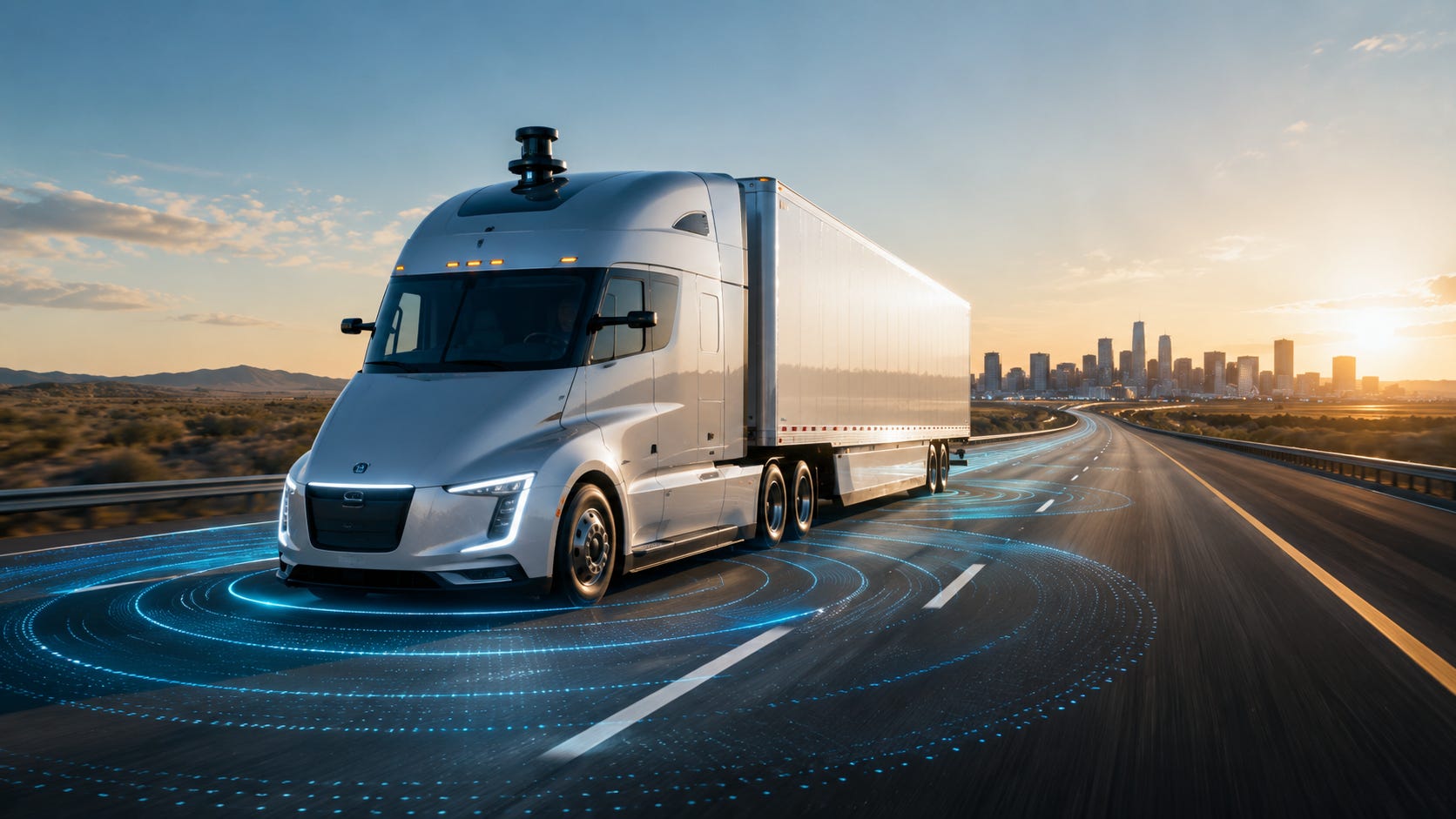
Driverless trucks have been “coming soon” for more than a decade. But recent developments suggest the industry may finally be approaching a new phase. This month, for example, PepsiCo disclosed that it is operating 35 driverless trucks on public roads in Arizona as part of its live supply chain operations.
Back in August 2022, we asked Indago members about testing driverless trucks. At the time, most respondents were not testing the technology. It’s now four years later. Has shipper sentiment changed? Are companies more willing to test or use driverless truck capacity, and what barriers remain to broader adoption?
Latest Talking Logistics Episode:
Final Mile Excellence: What Separates the Best from the Rest
Platinum Sponsors


New from Sponsor Blogs
Know a Great Driver? Here’s How to Earn More Than $5,000 with Werner’s Referral Program
Source: Werner
How outsourced carrier contracts mitigate operational risk: Why a strong logistics partner matters
Source: Uber Freight
Everything You Want to Know About Power Only Loads (Updated: July 2026)
Source: Werner
Source: Descartes
Frosty Acres Summer Conference
Source: Descartes
Q2 freight market update: Market pressures converge and create urgency
Source: Uber Freight
2026 Outlook: Spot Market strategies for shippers, carriers and brokers
Source: Trimble
Transportation in 2026: From experimentation to acceleration
Source: Trimble
Gold Sponsors

